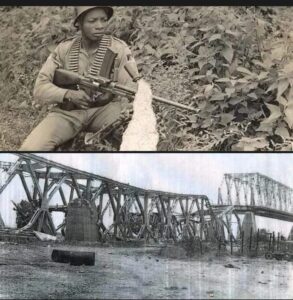
The History On How the first invasion of Onitsha Happened.
THE FIRST INVASION OF ONITSHA
October 4–12, 1967
By October 1967, the Nigerian Civil War had reached Onitsha, one of the most important cities on the eastern side of the River Niger.
What followed was one of the fiercest battles of the war—a confrontation between the Nigerian 2nd Division and Biafran forces defending Onitsha.
The battle would last for days, and although Nigerian troops managed to enter and briefly take control of parts of the city, they would soon find themselves trapped in a deadly counterattack.
HOW IT ALL STARTED
The story began weeks earlier.
On September 20, 1967, Nigerian forces under General Murtala Mohammed pushed into the Mid-Western Region, forcing Biafran troops in the area to retreat eastwards toward Biafra.
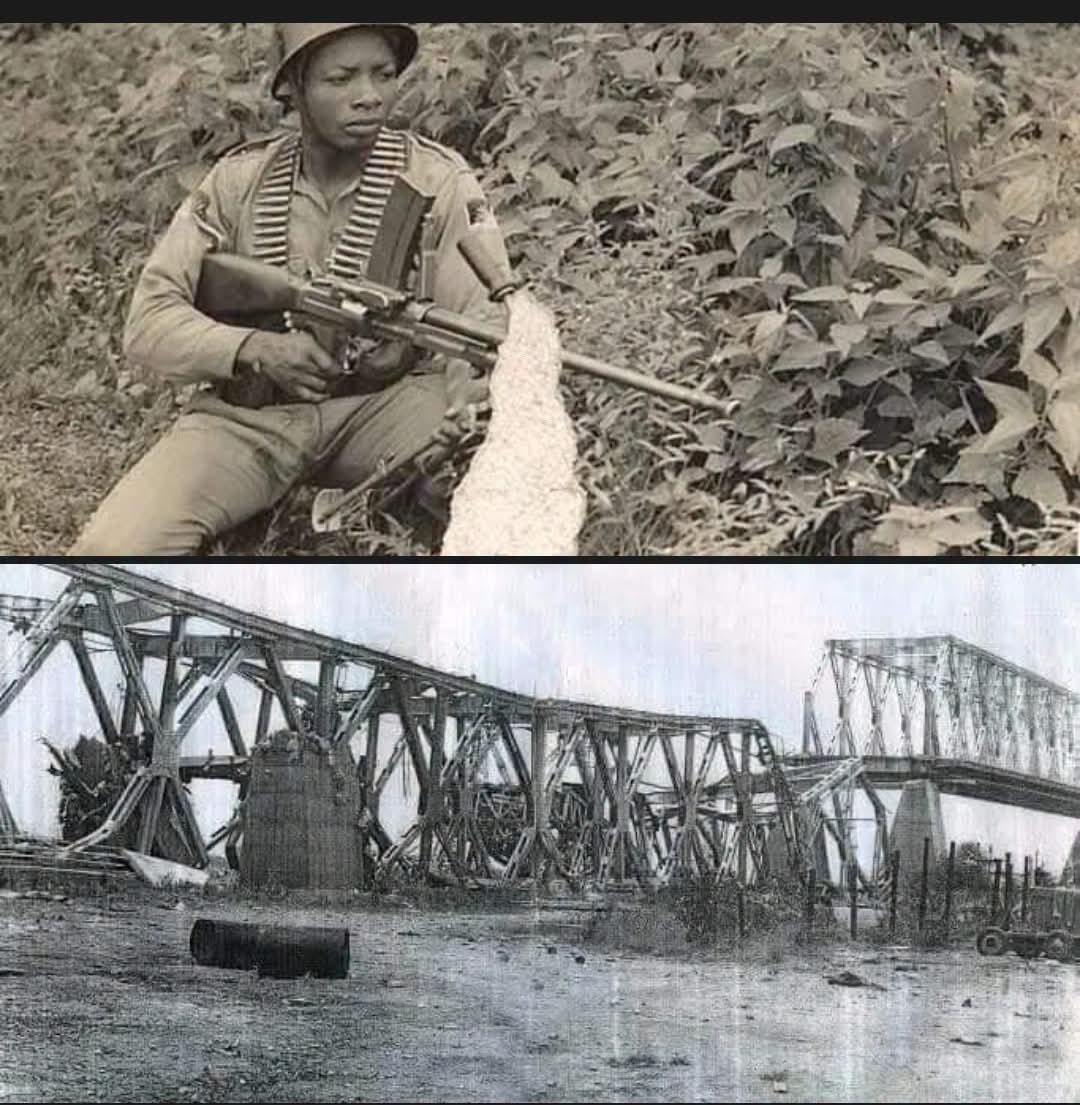
As the Biafran forces withdrew, they destroyed the River Niger Bridge at Onitsha in an attempt to slow the Nigerian advance.
The destruction of the bridge created a major problem for the Nigerian 2nd Division. Its troops were now on the western bank of the Niger, while Onitsha—and the route into Biafra—lay across the river.
By October, Nigerian troops had reached Asaba and begun establishing artillery positions along the western bank of the Niger. From there, preparations began for an assault on Onitsha.
But crossing the Niger would not be easy.
THE DEFENCE OF ONITSHA
On the Biafran side, the 11th Division was given the responsibility of defending the city and its surrounding areas.
The 12th Battalion, commanded by Colonel Mike Inveso, was responsible for the area between Idah and Nsugbe.
The 18th Battalion, under Colonel Assam Nsudoh, was tasked with defending Onitsha itself.
Meanwhile, the 11th Battalion, commanded by Major Joseph Achuzie, defended the area stretching from Atani to Ndoni.
The Biafrans prepared the riverbanks and beaches around Onitsha for an attack. Mines were laid, while machine guns and anti-tank weapons were positioned to confront any Nigerian troops attempting to cross the Niger.
General Murtala Mohammed was faced with a difficult choice.
With the Onitsha Bridge destroyed, he could either attempt to cross the Niger at Idah in the north or launch an amphibious assault directly across the river into Onitsha.
Despite advice from Nigerian Army Headquarters in Lagos, Mohammed chose the direct assault.
THE ATTACK BEGINS
On October 4, 1967, Nigerian artillery began pounding Onitsha.
For days, the bombardment continued.
Then, on October 12, General Murtala Mohammed personally led a flotilla of about 10 boats carrying roughly 5,000 Nigerian soldiers across the Niger River towards Onitsha.
The Biafran 18th Battalion resisted fiercely.
But under the pressure of the assault, the Biafran troops were eventually forced to withdraw from their positions.
For a moment, it appeared that the Nigerian forces had succeeded.
But what happened next changed the course of the battle.
Instead of immediately pursuing the retreating Biafran soldiers and consolidating their control of Onitsha, Nigerian troops reportedly turned their attention to the Onitsha Market, which was looted and set ablaze.
That pause gave the retreating Biafran forces something they desperately needed:
time.
The 18th Battalion regrouped.
And then the counterattack began.
THE COUNTERATTACK
Major Joseph Achuzie’s 11th Battalion moved along New Market Road, while Colonel Assam Nsudoh’s 18th Battalion advanced along Old Market Road towards the Nigerian positions.
The Nigerian troops inside Onitsha were suddenly confronted from multiple directions.
The fighting became intense.
The Nigerian 2nd Division was routed, with many soldiers killed and others captured.
But General Mohammed was not prepared to give up.
He ordered another force of about 5,000 soldiers from Lagos to cross the Niger and reinforce the troops in Onitsha.
The reinforcements came.
But once again, the Biafran defenders stopped them.
Still determined to capture the city, Mohammed ordered troops under Lieutenant-Colonel Ipoola Alani Akinrinade to launch a third assault.
Again, the attack failed.
The Biafran 11th and 18th Battalions held their positions and prevented the Nigerian forces from taking Onitsha.
THE CHANGE OF PLAN
After repeated attempts to capture Onitsha from Asaba, General Murtala Mohammed finally recognised that a direct assault across the Niger was not succeeding.
The Nigerian Army therefore changed its strategy.
Instead of continuing to throw troops directly into Onitsha from Asaba, Mohammed turned his attention northward.
The next objective was Idah.
The battle for Onitsha had demonstrated just how difficult it would be to force a crossing of the Niger and capture the city from the west.
For the Biafran defenders, the fighting around Onitsha had become a defining moment.
For the Nigerian 2nd Division, it was a costly setback—and the beginning of a different approach to reaching the eastern side of the Niger.
The struggle for Onitsha was far from over.