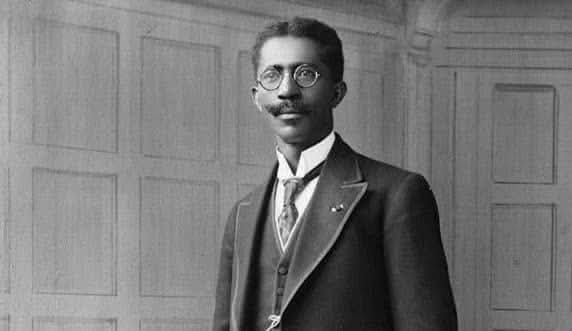
The History of Charles D. B. King Of Liberia, Who Won the 1927 election with 234,000 vote in a country of 15,000 register voters.
More than nine decades ago, Liberia witnessed one of the most extraordinary episodes in the history of elections — a presidential election whose official results appeared to produce far more votes than the country had registered voters.
The election took place on 3 May 1927, with incumbent President Charles D. B. King of the True Whig Party seeking another term against Thomas J. R. Faulkner of the People’s Party. King was declared the winner by an overwhelming margin.
What made the result extraordinary was the number of votes attributed to King.
According to the figures that became widely cited, King received approximately 234,000 votes, while Faulkner received about 9,000. Yet Liberia had only around 15,000 registered or eligible voters under the restricted franchise of the period. That meant the reported votes for King alone were more than 15 times the size of the registered electorate.
Put simply, the numbers did not make mathematical sense.
The reported figures implied a voter turnout running into more than 1,500 percent — something that is obviously impossible under an ordinary electoral system.
The election subsequently became internationally notorious. It was listed in the Guinness Book of Records as the most fraudulent election ever reported in history, while Liberia’s later electoral authorities have also described the 1927 contest as exceptionally rigged.
There is, however, an important historical detail worth noting: different historical sources give slightly different figures. Some records put King’s total at 229,527 votes, while other widely circulated accounts use approximately 234,000 or 240,000. There are also historical accounts suggesting a much lower figure of about 24,000. Nevertheless, the version that entered Guinness and became widely repeated is the extraordinary figure of roughly 230,000-plus votes against an electorate of fewer than 15,000.
The Election’s Wider Consequences
The controversy surrounding the election did not disappear after King was declared the winner.
Faulkner subsequently made serious allegations against the King administration concerning forced labour and the exploitation of Liberian workers. The controversy eventually contributed to an international investigation into forced labour in Liberia by the League of Nations.
The investigation’s 1930 report implicated senior Liberian officials in abuses connected to forced labour. Political pressure intensified, and King eventually resigned from the presidency in 1930.
Thus, the 1927 election is remembered not simply because of an astonishing numerical discrepancy, but because it became part of a much larger chapter in Liberia’s political history involving electoral credibility, political power and allegations surrounding forced labour.
A Remarkable Family Connection
The story also has an interesting connection to Liberia’s modern political history.
Olubanke King-Akerele, born in 1946, is the granddaughter of Charles D. B. King. Decades after her grandfather’s controversial presidency, she went on to become a senior Liberian diplomat and politician.
King-Akerele served in the government of President Ellen Johnson Sirleaf, first as Minister of Commerce and Industry before becoming Minister of Foreign Affairs. Liberia’s Ministry of Foreign Affairs documented her service as foreign minister, including her representation of President Sirleaf at international diplomatic engagements.
She left the foreign affairs portfolio on 3 November 2010. Contemporary records identify her as a granddaughter of Charles D. B. King.
Today, at 80 years old, Olubanke King-Akerele represents a striking link between two very different eras of Liberian political history: the controversial politics of the 1920s and the post-war democratic era associated with Ellen Johnson Sirleaf’s presidency.
A Lesson From History
The 1927 Liberian election remains a powerful historical reminder of why electoral records matter.
An election is ultimately measured not only by who is declared the winner, but also by whether the numbers can withstand scrutiny. In Liberia’s case, the extraordinary figures attributed to Charles D. B. King became so remarkable that the election itself eventually became a reference point in discussions about electoral fraud.