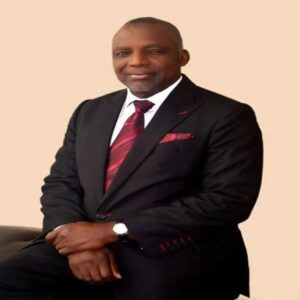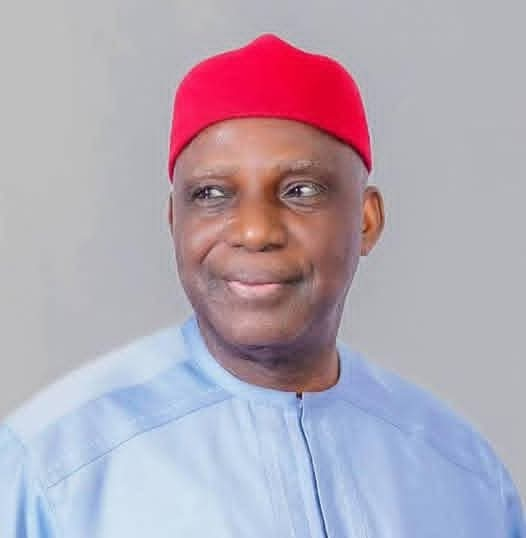
THE HISTORY AND BIOGRAPHY OF PROF. BARTHOLOMEW O NNAJI
FROM UMUODE, ENUGU STATE, TO THE WORLD: THE REMARKABLE SUCCESS STORY OF PROF. BARTHOLOMEW O NNAJI, THE IGBO ENGINEER WHO DARED TO TACKLE NIGERIA’S ELECTRICITY CHALLENGE!
Have you heard the story of the Igbo son who rose from a childhood disrupted by the Nigerian Civil W@r to become an internationally respected professor, robotics researcher, entrepreneur and former Minister of Power?
His name is Professor Bartholomew O Nnaji, popularly known as Prof. Bart Nnaji — one of Nigeria’s distinguished scientists and engineering innovators.
His story is one of education, determination, innovation, service and an enduring commitment to the development of his people.
📌 1. DATE OF BIRTH AND FAMILY BACKGROUND
Professor Bart Nnaji was born on July 13, 1956, in Enugu State, southeastern Nigeria. In July 2026, he celebrated his 70th birthday.
He was born into the family of the late Chief Emmanuel Nnaji Onovo and Mrs. Alice Nev Nnaji, according to published biographical accounts.
He hails from Umuode community in Nkanu East Local Government Area of Enugu State, in the southeastern part of Nigeria.
He is married to Agatha, who has been described in biographical writing as his devoted life partner. He has also maintained a connection with his hometown through educational and community development initiatives.
📌 2. HIS CHILDHOOD AND EARLY EDUCATION
Bart Nnaji’s journey was not without difficulties.
His childhood was affected by the Nigerian Civil W@r of 1967–1970. Accounts of his life describe how the conflict disrupted his education and forced his family to experience the hardship of displacement.
As a young boy, he initially struggled with his schoolwork. A major turning point came when he was placed under the guidance of a teacher uncle. This change helped him develop greater discipline and excel academically.
He attended St. James’ School at Isigwe, Ugbawka, and St. Anthony’s School at Obe before proceeding to St. Patrick’s College, Emene, Enugu, where he distinguished himself academically.
His life demonstrates that an early struggle does not have to determine a person’s final destination.
📌 3. FROM SPORTS TALENT TO A SCHOLARSHIP IN AMERICA
Before becoming widely known for his engineering achievements, Nnaji also distinguished himself in athletics.
His sporting ability helped him secure an opportunity to study in the United States through a sports scholarship.
In 1977, he proceeded to St. John’s University in New York, where he studied physics. He graduated in 1980 with a Bachelor of Science degree, reportedly completing his undergraduate studies in just two years and nine months.
He also excelled in long jump and triple jump, earning recognition for his athletic achievements.
This was a remarkable transition: a young man whose talents extended beyond the classroom was beginning to build the academic foundation for an international career in science and engineering.
📌 4. HOW HE BECAME AN INTERNATIONALLY RECOGNISED ENGINEER
After his first degree, Nnaji continued his studies at Virginia Polytechnic Institute and State University, popularly known as Virginia Tech.
There, he earned a master’s degree and a PhD in engineering, specialising in areas connected to industrial systems and manufacturing engineering.
He subsequently undertook postdoctoral studies in artificial intelligence and robotics at the Massachusetts Institute of Technology (MIT).
These qualifications opened the door to an exceptional academic career.
In 1983, he joined the University of Massachusetts Amherst, where he later became a professor of mechanical and industrial engineering. He established and directed its Automation and Robotics Laboratory.
He subsequently joined the University of Pittsburgh, where he held distinguished engineering professorships and led research initiatives in computer-integrated manufacturing and digital engineering design.
His work helped advance the concept of e-Design, which enables engineering teams to collaborate on product design and development using digital technologies.
At a time when many people in Nigeria had limited exposure to advanced robotics and digital manufacturing, Nnaji was contributing to research at the international frontier of engineering.
📌 5. THE RETURN TO NIGERIA AND PUBLIC SERVICE
Despite building a distinguished career abroad, Nnaji also served his home country.
In 1993, he was appointed Nigeria’s Minister of Science and Technology.
Years later, he returned to the centre of national development discussions concerning one of Nigeria’s most persistent problems: inadequate electricity.
Between 2010 and 2011, he served as Special Adviser to the President on Power and chaired the Presidential Task Force on Power.
In July 2011, he became Nigeria’s Minister of Power, serving until August 2012.
His experience in engineering, manufacturing and research informed his interest in finding practical solutions to Nigeria’s infrastructure challenges.
📌 6. THE BIRTH OF GEOMETRIC POWER
One of the most important chapters in his entrepreneurial journey was the establishment of Geometric Power Group, an indigenous power-development company incorporated in 2000.
His ambition was to develop electricity infrastructure that could support businesses, manufacturers, industries and households in Nigeria.
The company developed a 22-megawatt emergency power project in Abuja in 2001.
But Nnaji had a larger vision.
He wanted to demonstrate that a Nigerian-founded private company could develop an integrated electricity system capable of generating and distributing power to support an industrial city.
That vision led to the Aba Integrated Power Project in Abia State.
The project was designed to supply electricity to industrial, commercial and residential customers in the Aba area, including businesses whose productivity depends on reliable power.
After years of development and delays, the project was commissioned in February 2024.
It became a significant milestone in Nigeria’s electricity industry as a privately developed, integrated generation and distribution project.
His journey illustrates that building major infrastructure requires more than an idea. It demands technical knowledge, capital, persistence, partnerships and the willingness to keep working through setbacks.
📌 7. HIS CONTRIBUTIONS TO EDUCATION AND HIS HOMETOWN
Beyond engineering and business, Nnaji has been associated with educational and community development through the Bart Nnaji Foundation, established in 1984.
Published accounts describe the foundation’s involvement in scholarships, educational support and community projects in his hometown.
His philanthropic activities have also been associated with improvements in local infrastructure and support for educational institutions.
These efforts reflect an important lesson: success can have a greater impact when knowledge and resources are used to create opportunities for other people.
📌 8. AWARDS AND NATIONAL RECOGNITION
Professor Bart Nnaji has received several distinctions for his contributions to science, engineering and public service.
Among his honours are:
🏅 Nigerian National Order of Merit (NNOM), one of Nigeria’s highest recognitions for intellectual achievement.
🏅 Commander of the Order of the Niger (CON).
🏅 Officer of the Order of the Niger (OON).
🏅 Distinguished Public Service Award from the United States Department of State.
🏅 Recognition from international scientific and engineering institutions.
He is also a Fellow of the Nigerian Academy of Science and the Nigerian Academy of Engineering.
These honours reflect a career that has extended across academia, technological innovation, entrepreneurship and public service.
📌 9. THE LESSON EVERY YOUNG IGBO PERSON CAN LEARN
The life of Professor Bart Nnaji offers several lessons.
✅ Your childhood circumstances do not have to determine your future.
✅ Education can open doors to opportunities across the world.
✅ A person’s talents can take different forms, from sports to science, business and leadership.
✅ International exposure can be used to solve problems at home.
✅ Big projects often require years of persistence before their results become visible.
✅ Success becomes even more meaningful when it creates opportunities for other people.
Professor Bart Nnaji’s journey is not simply a story about academic qualifications or public office. It is also a story about applying knowledge to real-world challenges and attempting to build solutions that can support economic development.
From the classrooms of Enugu to universities in the United States, and from engineering laboratories to the development of power infrastructure in Nigeria, his career has crossed several fields.
His work on Geometric Power has placed him among the Nigerian entrepreneurs seeking practical ways to address the country’s electricity challenges.
His story reminds us that the world can benefit from the ideas of an African engineer — and that the knowledge acquired abroad can also be put to work at home.
👏 Let us celebrate the achievements of distinguished sons and daughters of Igboland whose work has contributed to science, technology, business and national development.
📢 QUESTION FOR YOU: What do you think Nigeria needs most to produce more innovators like Professor Bart Nnaji — better education, access to funding, reliable electricity or stronger support for local industries?
THE HISTORY AND BIOGRAPHY OF PROF. BARTHOLOMEW O NNAJI