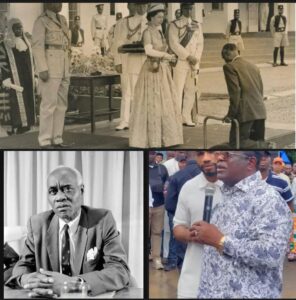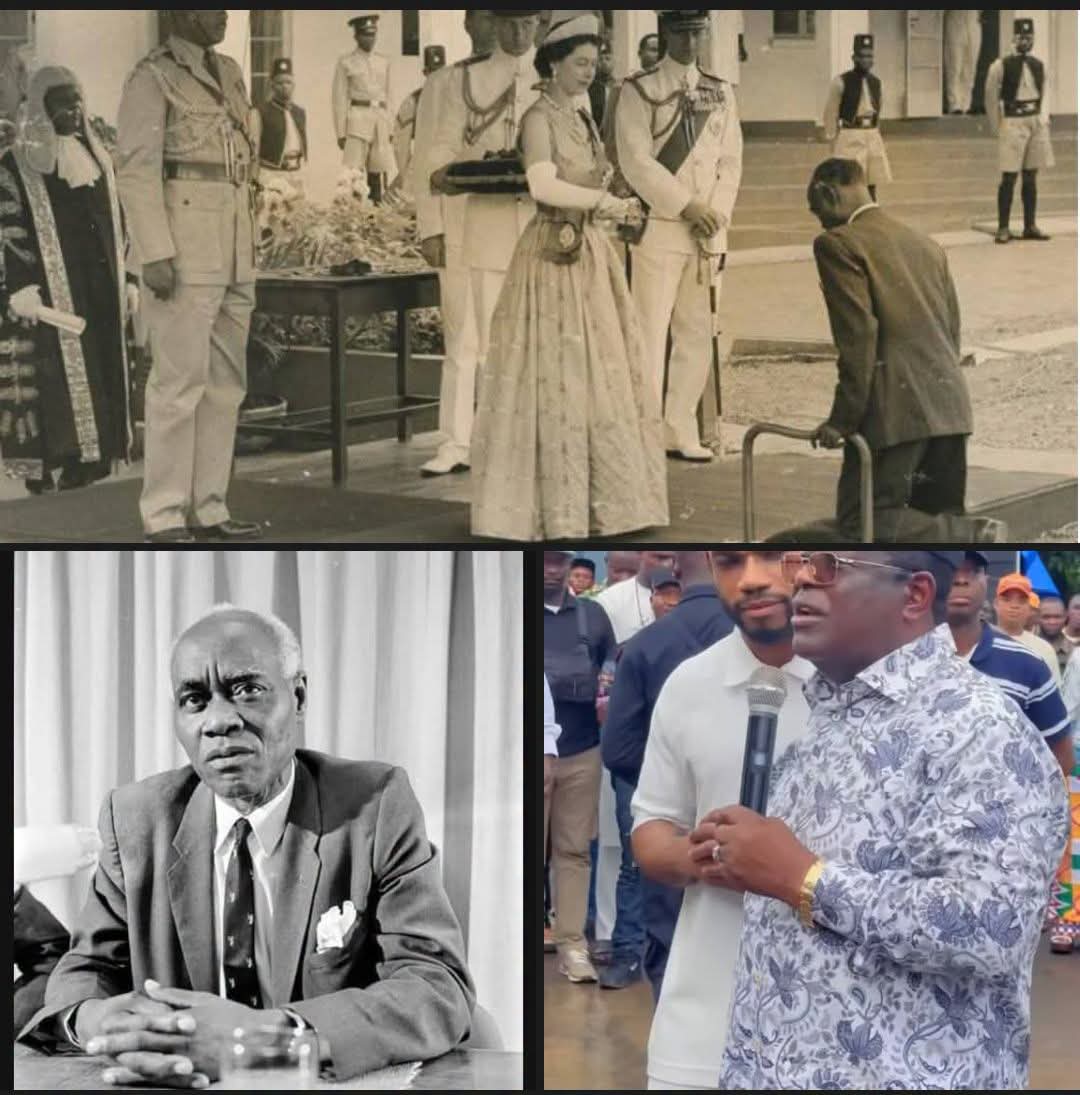
History And Story of A great Man From Ebonyi State Dr. Akanu Ibiam.
Before anyone tells us that Igbos from other parts of Nigeria hate Ebonyi people, they should first remember the story of Dr. Akanu Ibiam.
Sir Francis Akanu Ibiam was born on 29 November 1906 in Unwana, Afikpo, in what is today Ebonyi State. He was a medical doctor, missionary, educator, traditional ruler and statesman whose influence went far beyond his immediate community.
Long before he became Governor of Eastern Nigeria, Ibiam had already established himself as a respected public servant. In 1940, he represented his people in the Afikpo Divisional Council. In 1951, he contested and won election into the Eastern House of Assembly, representing the Afikpo Division of Ogoja Province.
His reputation was not built merely on politics. He had spent years serving ordinary people as a medical missionary. He established Abiriba Hospital and later supervised mission hospitals at Itu and Uburu. He also served in important educational and religious positions, including as principal of Hope Waddell Institution and president of the Christian Council of Nigeria.
Then came 1960.
As Nigeria approached independence, the Eastern Region needed a new Nigerian governor. Michael Okpara’s government considered possible candidates and the cabinet unanimously endorsed Akanu Ibiam. When the announcement was made, it was met with celebration, particularly in Afikpo. He was subsequently sworn in as Governor of Eastern Nigeria in October 1960.
And here is the part we should remember today.
Akanu Ibiam was an Ebonyi-born Igbo man, but his identity and influence were never confined to Ebonyi. He was regarded as a leader of the wider Eastern Region. His public life connected him with people across Igboland and beyond, while his reputation for integrity, education, medicine and public service gave him a stature that transcended his place of birth.
The Eastern Region of that era was much larger than today’s South-East states. It included territories that would later become several different states. Yet a man from Unwana in present-day Ebonyi rose to become the region’s first Nigerian governor.
Even more remarkable was what happened after the Nigerian Civil War.
Ibiam became one of the prominent voices advocating humanitarian assistance for the people of Biafra. Through his international church connections, he worked to secure relief for refugees and victims of the war. He travelled internationally to seek humanitarian support, and in protest against Britain’s role in supplying arms to the Federal side, he returned his British knighthood and dropped the name “Francis,” choosing to be known simply as Akanu Ibiam.
This is why history matters.
Today, you sometimes hear people say that “other Igbos hate Ebonyi people” or that there is some deep-seated hatred between Ebonyi people and other Igbos.
But history gives us a much more complicated and human picture.
Akanu Ibiam came from Unwana in today’s Ebonyi State, yet his service and reputation reached across Igboland. His story reminds us that an Igbo man does not have to come from one’s own town, clan or state before he can become our own.
Before the creation of today’s states, our people lived within broader political, cultural and social structures. People travelled, worked, worshipped, studied and built institutions across what we now call Abia, Anambra, Ebonyi, Enugu and Imo, Igbo part of Rivers, Igbo part of Delta —and beyond.
Akanu Ibiam’s story is therefore not just the story of an Ebonyi man. It is part of the wider story of the Igbo people.
And perhaps that is the lesson we need today: we should not allow today’s political boundaries to rewrite yesterday’s history or convince us that our people have always been divided the way we sometimes see ourselves today.
Akanu Ibiam was from Ebonyi.
But his legacy belongs to all of us.
Igbo bu Enyi.