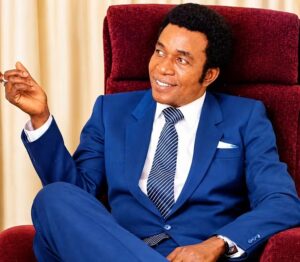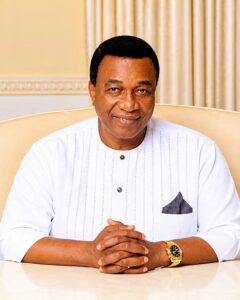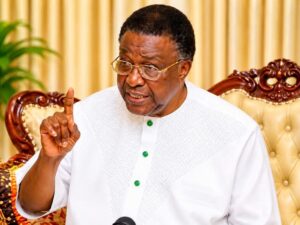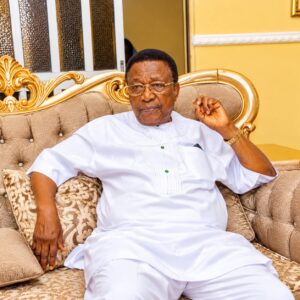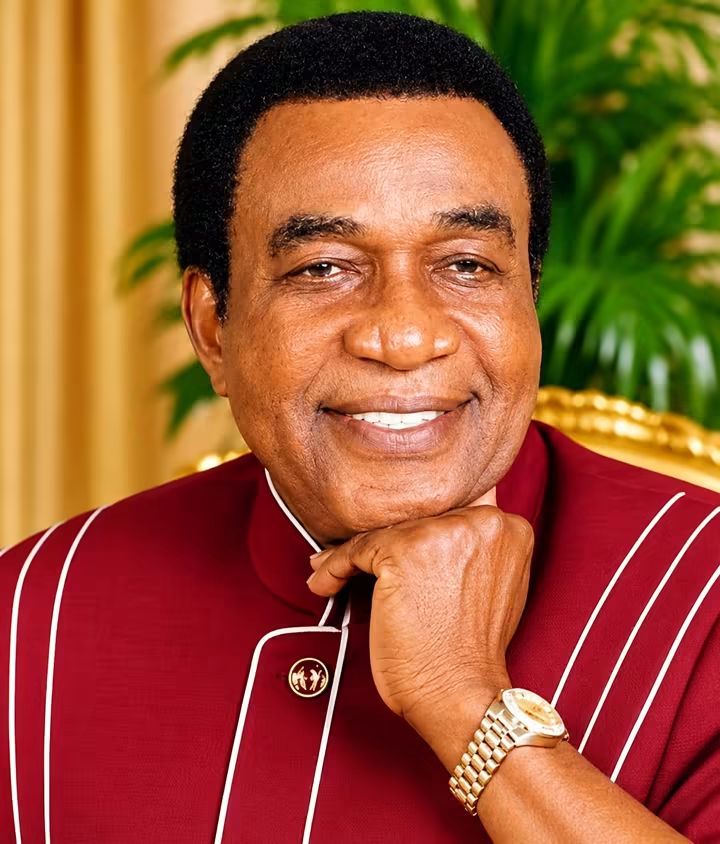
THE HISTORY AND BIOGRAPHY OF CHIEF JIM NWOBODO
THE REMARKABLE LIFE STORY OF CHIEF JIM NWOBODO: FROM A YOUNG TEACHER AND SHELL WORKER TO BUSINESS TYCOON, FIRST EXECUTIVE GOVERNOR OF OLD ANAMBRA STATE AND NATIONAL ELDER STATESMAN.
Some people make history through wealth, others through political power, but a few leave their footprints in business, sports, education, politics and the lives of ordinary people.
One of such men is Chief Jim Ifeanyichukwu Nwobodo, a distinguished son of Igboland whose life journey took him from the early years of his education in Northern Nigeria to becoming a successful businessman, the first civilian Executive Governor of the old Anambra State, a federal minister and a senator of the Federal Republic of Nigeria.
His story is one of ambition, education, entrepreneurship, leadership, political struggles and resilience.
Today, we look at the life and achievements of a man whose name occupies an important place in the political history of the old Eastern Region.
1. DATE OF BIRTH AND FAMILY BACKGROUND
Chief Jim Ifeanyichukwu Nwobodo was born on May 9, 1940, in Agyaragu, Lafia, in present-day Nasarawa State, Nigeria.
He was born to the late Mr Peter Nwobodo and Mrs Susan Nwobodo.
Although he was born in Lafia, where his parents were residing at the time, his ancestral roots are in Amechi-Awkunanaw, Enugu South Local Government Area of present-day Enugu State.
He grew up with an understanding of the importance of education, discipline and personal development.
His background is a reminder that a person’s birthplace does not necessarily determine where their roots and identity lie.
2. EDUCATIONAL BACKGROUND
Jim Nwobodo’s educational journey took him through different parts of Nigeria.
His early education began at St. James School in Lafia, where he spent his primary school years. He later completed his primary education at Government School, Awka, in present-day Anambra State.
He proceeded to St. Peter’s College, Zaria, in 1956 and completed his studies in 1959, obtaining a Teachers’ Certificate.
He subsequently attended the Nigerian College of Arts, Science and Technology, studying in Enugu and Ibadan, where he obtained his Advanced Level qualifications.
His academic journey eventually took him to the prestigious University College, Ibadan, where he studied English and graduated in 1964 with a Bachelor of Arts (Honours) degree.
Interestingly, he was not just an ordinary student. He was active in student leadership and served as Students’ Union Secretary. He also represented Nigeria internationally through the World University Service, becoming its only African executive member at the time, according to his university citation.
His education gave him a strong foundation for the leadership and business responsibilities that followed.
3. HIS FIRST JOBS: FROM KING’S COLLEGE TO SHELL
After graduating in 1964, Jim Nwobodo began his professional career as a teacher at King’s College, Lagos, one of Nigeria’s well-known secondary schools.
He worked there until 1966.
In 1966, he moved into the corporate world and joined Shell Company of Nigeria as a Development Manager. He later worked with Shell BP in Port Harcourt.
He continued working during the Nigerian Civil W@r years.
This stage of his life is particularly important because it shows that before becoming a prominent businessman and politician, he had professional working experience.
He understood the importance of employment, administration, organisation and developing people.
4. THE GRASS-TO-GRACE STORY: HOW HE BUILT HIS BUSINESS EMPIRE
Perhaps one of the most remarkable aspects of Jim Nwobodo’s life is what happened after the Nigerian Civil W@r.
The w@r ended in 1970, leaving many people in the former Biafran territory struggling to rebuild their lives and businesses.
According to the citation presented during his 1991 honorary doctorate ceremony, Nwobodo resumed his business journey after the w@r with just £20 in his pocket.
Rather than allow the difficult circumstances of the post-w@r period to determine his future, he ventured into entrepreneurship.
He established Link Group International Limited, which was incorporated in 1972.
The company grew into a substantial business organisation with interests in scientific equipment, pharmaceuticals and publishing.
One of its important business relationships was with Fisher Scientific Company of the United States.
Link Group became involved in supplying scientific and laboratory equipment to educational institutions, universities, government colleges and hospitals across Nigeria.
Among the projects documented in his 1991 university citation were:
– Supply of laboratory equipment for the post-war University of Nigeria.
– Supply of equipment to 156 teachers’ training colleges.
– Supply of science and domestic science equipment to 52 Federal Government Colleges.
– Provision of agricultural science laboratory equipment to Ahmadu Bello University.
– Supply of scientific equipment to secondary schools in Anambra State.
His business interests also expanded into pharmaceuticals through Link Pharmaceuticals.
He ventured into publishing through Jupiter Publishers, which later developed into Satellite Press Limited, associated with the publication of Satellite Daily and Sunday Satellite.
This was how a young man who had worked as a teacher and corporate employee developed into an entrepreneur with interests in several sectors.
His story demonstrates that successful business empires can be built through identifying opportunities, developing partnerships, taking calculated risks and maintaining the determination to grow.
5. HIS LOVE FOR FOOTBALL AND THE SUCCESS OF ENUGU RANGERS
Apart from business, Jim Nwobodo was passionate about sports, particularly football.
Between 1975 and 1979, he served as Chairman of Rangers International Football Club of Enugu.
During his leadership, Rangers became one of the most celebrated football clubs in Nigeria and Africa.
The club won the African Cup Winners’ Cup in 1977, an achievement that brought enormous pride to Nigerian football.
His involvement in Rangers showed that his interests extended beyond making money. He also wanted to contribute to the development of sports and provide opportunities for young people.
His leadership at Rangers helped establish his reputation as a man who could combine business, administration and sporting development.
6. HOW HE BECAME THE FIRST EXECUTIVE GOVERNOR OF OLD ANAMBRA STATE
Having established himself in business and sports administration, Nwobodo eventually ventured into politics.
In 1978, he joined the Nigerian People’s Party (NPP), led by the legendary Dr. Nnamdi Azikiwe, popularly known as Zik of Africa.
With the support and political mentorship of Azikiwe, he contested the 1979 governorship election in the old Anambra State.
He won.
On October 1, 1979, at the age of just 39, Chief Jim Nwobodo was sworn in as the first Executive Governor of old Anambra State.
At the time, old Anambra State covered areas that today belong to Enugu, Anambra and parts of Ebonyi State.
He assumed office at a time when the state still faced serious post-civil-w@r reconstruction challenges.
His administration embarked on projects intended to rebuild infrastructure, expand education, improve electricity supply, develop industries and create employment.
7. MAJOR ACHIEVEMENTS AS GOVERNOR (1979–1983)
Some of the major projects and institutions associated with his administration include:
1. Anambra State University of Science and Technology (ASUTECH)
His administration established the Anambra State University of Science and Technology in Enugu, regarded as Nigeria’s first university of technology.
Following subsequent state creation, its campuses and institutional legacy contributed to the development of today’s Enugu State University of Science and Technology, Nnamdi Azikiwe University and Ebonyi State University.
2. Nike Lake Resort
His administration established the famous Nike Lake Resort in Enugu, which became an important hospitality and tourism destination.
3. Greater Enugu Water Project
The project was part of efforts to improve access to water for residents.
4. Greater Onitsha Water Scheme
His government also pursued major water infrastructure projects for the people.
5. Abakaliki Water Scheme
This was another important infrastructure project undertaken during his administration.
6. Rural Electrification
His government embarked on a rural electrification programme aimed at extending electricity infrastructure to communities across the state.
7. Ikenga Hotels
The administration established Ikenga Hotels, including facilities in Awka and Nsukka.
8. Industrial Development
Projects associated with his administration included the Flour Mills at Emene, Aluminium Products Factory at Ogbede, Building Materials Factory at Ezillo and Metallurgical Factory at Ozubulu.
9. Healthcare Development
The Specialist Hospital project in Abakaliki and the development of health facilities were also part of his administration’s efforts.
10. Anambra State Television
His government established Anambra State Television, popularly associated with Channel 50.
11. Nnamdi Azikiwe Stadium
Construction of the stadium in Enugu was initiated during his administration.
12. Agricultural Development
His government introduced agricultural development initiatives, including the Food for the People programme and community farming efforts.
These projects formed an important part of the development history of the old Anambra State.
8. HIS POLITICAL CHALLENGES AND TIME IN PRISON
Jim Nwobodo’s journey was not without difficulties.
After serving as governor from 1979 to 1983, he contested for re-election in 1983 but lost to Chief Christian Onoh.
In December 1983, Nigeria experienced another military coup, bringing the Second Republic to an end.
Nwobodo subsequently faced detention and imprisonment under the military government of General Muhammadu Buhari.
He remained in detention and prison for several years before receiving a presidential pardon from General Ibrahim Babangida in October 1988.
This was a difficult chapter in his life, but he eventually returned to public life.
His experience is an important reminder that success does not mean a person will never experience setbacks. Sometimes, even people who have attained the highest positions in society face difficult seasons.
9. APPOINTMENT AS MINISTER OF SPORTS AND YOUTH DEVELOPMENT
In 1995, Jim Nwobodo was appointed Minister of Youth and Sports under the military administration of General Sani Abacha.
One of the most memorable sporting moments during his tenure came in 1996.
Nigeria’s Under-23 national football team, popularly known as the Dream Team, participated in the Atlanta Olympic Games in the United States.
The Nigerian team defeated football powerhouses Brazil and Argentina on its way to winning the Olympic gold medal.
This historic achievement made Nigeria the first African country to win Olympic gold in men’s football.
The team featured celebrated footballers, including Nwankwo Kanu, Jay-Jay Okocha, Celestine Babayaro and others.
Although the victory belonged to the players, coaches and entire football establishment, Nwobodo was the Minister of Sports during this historic period.
His name consequently remains associated with one of the greatest achievements in Nigerian football history.
10. HIS SENATE CAREER AND PRESIDENTIAL AMBITION
Following Nigeria’s return to democratic government in 1999, Jim Nwobodo continued his political journey.
He became a founding member of the Peoples Democratic Party (PDP).
In 1999, he was elected Senator representing Enugu East Senatorial District.
During his time in the Senate, he served as Chairman of the Senate Committee on Internal Affairs.
His political ambition extended beyond the governorship and Senate.
In 2003, he contested for the presidency of Nigeria under the platform of the United Nigeria People’s Party (UNPP).
Although he did not become Nigeria’s president, his participation demonstrated his continued interest in national leadership.
Over the years, he remained an influential political figure in Enugu State and the wider South-East region.
11. HIS WIFE, CHILDREN AND FAMILY LIFE
Chief Jim Nwobodo is married to Chief (Dr.) Mrs Patricia Nwobodo, popularly known as Pat.
She has been publicly recognised as an important source of support throughout his public and private life.
The couple have children.
However, their family also experienced a painful tragedy when their son, Dr. Ifeanyichukwu Nwobodo Jnr., a medical doctor and former Enugu State Commissioner for Youth and Sports Development, d!ed in November 2014 following a brief illness.
This was a difficult period for the family.
His marriage and family life have remained part of his personal story, alongside his public responsibilities and political career.
12. HIS PHILANTHROPY AND CONTRIBUTIONS TO HIS COMMUNITY
Beyond politics and business, Nwobodo has also been associated with philanthropy and community development.
One notable example was his contribution towards the construction of St. Matthew’s Anglican Church in Amechi-Awkunanaw.
According to the citation presented during his honorary doctorate ceremony, he began by donating ₦50,000 towards the church project, subsequently increasing his contributions until the building was completed.
The church was consecrated on April 25, 1982.
His interest in community development also extended to sports, education and opportunities for young people.
His involvement in these areas formed part of his public legacy.
13. HONORARY DOCTORATE AND RECOGNITION
In recognition of his contributions to business, education, sports, public administration and society, Jim Nwobodo received an honorary Doctor of Laws (LL.D.) degree from the Anambra State University of Technology in May 1991.
The university’s citation described him as a businessman, publisher, industrial developer, philanthropist, administrator and statesman.
This recognition reflected the different areas in which he had made his mark.
14. HIS RECENT LIFE AND TRADITIONAL ROLE
In January 2026, another important chapter was added to his life.
At the age of 85, Nwobodo formally returned to his ancestral family compound at Ugwu Agba, Amechi-Uno, in Enugu South Local Government Area.
He had assumed the traditional family position of Onyeizhi Umunna, meaning the eldest man of his kindred.
He explained that returning to his father’s ancestral home was important to him, particularly because he had become the eldest in his family and wanted to participate more fully in family meetings and community development.
The occasion was attended by Enugu State Governor Peter Mbah, traditional rulers and other dignitaries.
On May 9, 2026, Chief Jim Nwobodo celebrated his 86th birthday.
He remains an important elder statesman in the political history of Enugu State and Nigeria.
15. LESSONS FROM THE LIFE OF CHIEF JIM NWOBODO
His journey offers several lessons for young Nigerians, entrepreneurs and aspiring leaders.
1. Your beginning does not determine your ending. Being born in a particular location or coming from a modest background does not limit what you can achieve.
2. Education is an investment. His educational background helped prepare him for professional life, business and leadership.
3. Employment can be a stepping stone. He worked as a teacher and later with Shell before establishing his own business.
4. Entrepreneurship requires courage. After the Nigerian Civil War, he ventured into business despite the difficult economic circumstances.
5. Build beyond yourself. His business interests extended into pharmaceuticals, scientific equipment and publishing.
6. Leadership comes with responsibility. His career in sports, business and government demonstrates the importance of serving people and building institutions.
7. Setbacks are not necessarily the end. His imprisonment and subsequent return to public life illustrate the unpredictable nature of a public career.
8. Never forget your roots. His return to his ancestral home in 2026 is a reminder of the importance of family, heritage and community.
CONCLUSION: A MAN WHO MADE HIS MARK IN BUSINESS, POLITICS AND HISTORY
Chief Jim Ifeanyichukwu Nwobodo’s story is much bigger than becoming a governor or a politician.
He was a teacher, a Shell employee, an entrepreneur, a publisher, a sports administrator, a governor, a minister and a senator.
From starting his business journey after the Nigerian Civil War with very limited resources to establishing Link Group International, from leading Rangers International to becoming the first Executive Governor of the old Anambra State, his journey represents several decades of ambition, enterprise and public service.
His life also reminds us that success is not always a straight road. There are moments of victory, disappointments, difficult decisions and personal challenges.
For young Nigerians who believe that their present circumstances define their future, his journey offers an important message:
Never allow the circumstances of your beginning to limit the greatness of your destination.
A man who started his professional journey as a teacher eventually became one of the most prominent political figures in the history of the old Eastern Nigeria.
That is a story worth documenting and remembering.
Chief Jim Ifeanyichukwu Nwobodo — a name that will remain part of the history of Igboland and Nigeria.
WHAT CAN THE YOUNGER GENERATION LEARN FROM THE LIFE OF CHIEF JIM NWOBODO?
Do you believe today’s young Nigerians can build business empires and become influential leaders by following the principles of education, hard work, courage and entrepreneurship?
Share your thoughts in the comment section.
THE HISTORY AND BIOGRAPHY OF CHIEF JIM NWOBODO