The History Of The New Lekki-Epe International Airport
Lagos Targets 2027 To Begin Construction Of Lekki-Epe International Airport, A Major Aviation Project Planned On 3,500 Hectares.
Lagos State is preparing to add another major aviation facility to its infrastructure network, with Governor Babajide Sanwo-Olu announcing that construction of the proposed Lekki-Epe International Airport is expected to commence in 2027.
The proposed airport will be situated along the Lekki-Epe corridor, an increasingly important economic zone in Nigeria, and is planned on approximately 3,500 hectares of land. According to the Lagos State Government’s 2025–2027 fiscal document, the first phase is estimated to cost about $900 million, with an initial passenger-handling capacity of approximately five million passengers annually.
The project is being developed under a Public-Private Partnership (PPP) arrangement, with Lagos State signing a Memorandum of Understanding with Summa Group in February 2025 for its development and construction.
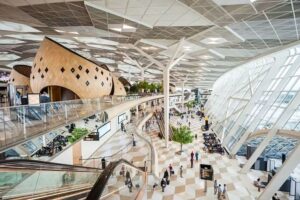
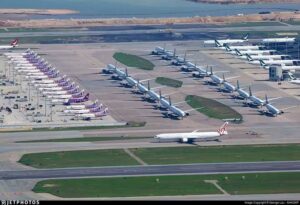
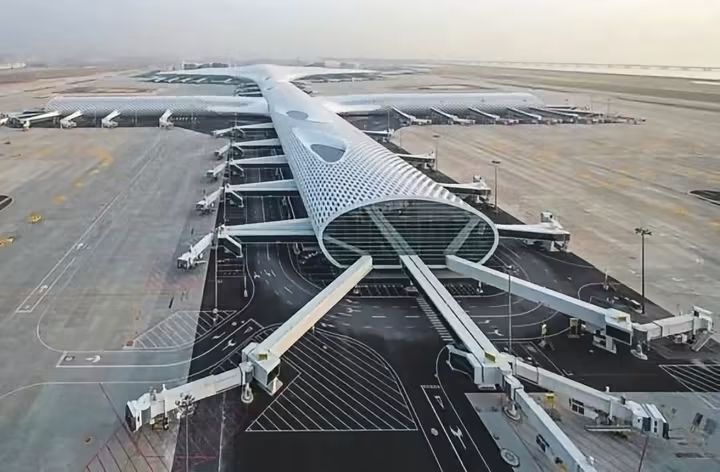
Beyond its passenger terminal, the proposed airport is expected to feature cargo-handling facilities, aircraft parking aprons, runways, taxiways, air traffic control facilities, navigational aids, airfield lighting, baggage-handling systems, security surveillance and aircraft ground-support infrastructure.
One particularly notable feature is its planned Code F compliance. This is an aviation design classification that allows an airport to accommodate some of the world’s largest commercial aircraft, including the Airbus A380. It reflects the ambition to develop an airport capable of handling large-scale international aviation operations.
The Lekki-Epe corridor is home to major investments, including the Dangote Refinery, Lekki Deep Sea Port and Lekki Free Trade Zone. These developments are creating growing demand for passenger transportation, international business connectivity, logistics and cargo services.
An international airport in this location could provide businesses, investors and international visitors with more direct access to this industrial and commercial ecosystem. It could also support the movement of high-value and time-sensitive cargo, complementing the activities of the nearby seaport and industrial facilities.
Another important reason for the project is the need to reduce the pressure on Murtala Muhammed International Airport in Ikeja, which currently serves as Lagos’s principal international aviation gateway. Establishing another major airport in the eastern part of the state would provide additional aviation capacity and improve access for residents and businesses located around Lekki, Epe and neighbouring communities.
The project also presents opportunities for employment creation, from construction and engineering to aviation operations, cargo handling, hospitality, transportation, maintenance and other supporting services.
Furthermore, its successful delivery could encourage additional investments in hotels, logistics parks, warehousing, commercial developments and other businesses around the airport corridor. It could also strengthen Lagos’s competitiveness as a destination for international trade, tourism and investment.
For Lagos State, It is an opportunity to connect aviation infrastructure with the growing industrial, maritime and commercial activities of the Lekki-Epe corridor.
With construction now targeted for 2027, the focus should be on translating the existing plans and agreements into actual development, ensuring proper financing, regulatory compliance, environmental considerations and long-term operational sustainability.
If successfully delivered, the Lekki-Epe International Airport could become an important addition to Nigeria’s aviation infrastructure and a major economic asset for Lagos State.
The History Of The New Lekki-Epe International Airport