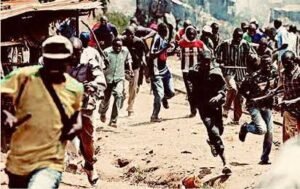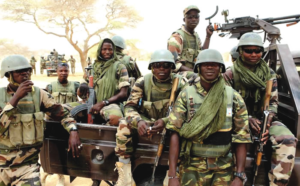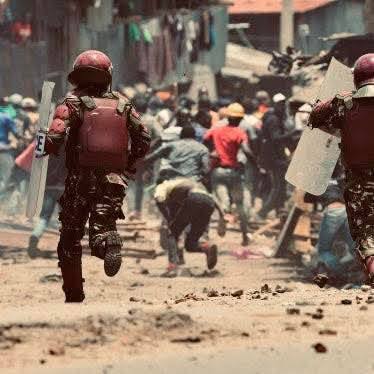
On October 10, 2001, 19 Nigerian soldiers deployed on a peacekeeping mission were abducted and killed in Vaase, Benue State. Zaki-Biam Massacre
Zaki-Biam Massacre: On October 10, 2001, 19 Nigerian soldiers deployed on a peacekeeping mission were abducted and killed in Vaase, Benue State.
This incident triggered a massive military reprisal known as the Zaki-Biam Massacre (also referred to as Operation No Living Thing) from October 20 to 24, 2001
Perpetrators: Nigerian Army
- Locations Affected: Multiple Benue State villages including Vaase, Gbeji, Anyiin, Kyado, Zaki-Biam, Tse-Adoor, and Sankera.
- Impact & Casualties: Over 200 unarmed Tiv civilians—including men, women, and children—were killed during mass shootings, market square executions, house demolitions, and burnings carried out with armored tanks, machine guns, and helicopter gunships.
Aftermath: The military action drew widespread national and international condemnation, leading to official investigations, public apologies from government and military figures, and protracted legal and compensation disputes for the victims’ families, as documented on the Zaki Biam Massacre Wikipedia Page.
More than 100 people were killed and thousands rendered homeless when men dressed in military uniforms attacked villages in Benue State, central Nigeria, on Tuesday, local officials said. The assailants destroyed many houses in Vatse, Zaki-Biam, Anyiin and Gbeji settlements, located near Benue’s border with neighbouring Taraba State, the officials added.
The attacks came less than two weeks after a contingent of 22 soldiers deployed to halt clashes between two neighbouring communities, the Tiv and the Jukun, were abducted at Vatse on 10 October. The mutilated bodies of 19 of the soldiers were found two days later in the Tiv stronghold of Zaki-Biam. This led thousands of people to flee the area for fear of reprisal attacks by the armed forces.
At the burial of the 19 soldiers on Monday, President Olusegun Obasanjo pledged that everything would be done to track down those responsible for killing them and to prevent a repeat of such incidents.
“At Gbejir the residents said the soldiers asked members of the community to gather at the village square for an address,” Mike Iyovorse, a local government official from the area, told IRIN. “Then they separated the men from the women and children and killed all the men.”
Nigerian military authorities have denied responsibility for the attacks. The army’s spokesman, Colonel Felix Chukwumah, told journalists that soldiers in the area had strict instructions to retrieve weapons from militants and track down those who killed their colleagues but not to attack villagers.
Shima Ayati, the Benue State official responsible to taking care of the refugees described the situation as very desperate. “There is an alarming refugee situation in Benue State beyond the capacity of the government,” he told journalists. “We are appealing to international organizations to assist.”
Nigerian Army apologizes for killing of 100 citizens in 2001
The Nigerian Army publicly apologized to the people of Benue State, north central Nigeria, Tuesday over the killing of its citizens in the Zaki Biam area of the state by soldiers in 2001.
The Army Chief of Staff, Lieutenant General Luka Yusuf, tendered the apology in Makurdi, the state capital, at the annual conference of the army.
The army massacred some 100 people in Zaki Biam in 2001 to avenge the killing of 19 of the troops deployed to restore peace in the area following ethnic violence.
Many properties, including the house of the former Army Chief of Staff, retired General Victor Malu, was burnt in the disturbance.
Yusuf said the unfortunate incident happened while the army was executing its constitutional responsibility.
He urged the people of Benue State not to regard the army as an enemy “but an institution that is committed to unity and peacefu co-existence in Nigeria.”
He noted that the army had lost men in active service both at home and at international peacekeeping operations.
“Although various commendations were won, they were not without casualties on our part,” he said.
“The killing of seven Nigerian soldiers in Darfur though devastating, has only strengthened our resolve to the restoration of peace in those troubled spots,” he said.
Gabriel Suswam, governor of Benue State accepted the apology on behalf of his people.
Suswam implored the Nigerian government to rehabilitate victims of the disturbance to remove the scars of the incident.
On October 10, 2001, 19 Nigerian soldiers deployed on a peacekeeping mission were abducted and killed in Vaase, Benue State.