The History And everything you need to know about Nwafor Ogidi festival
The History Of Nwafor Ogidi: Inside the Festival Keeping an Old Igbo Tradition Alive.
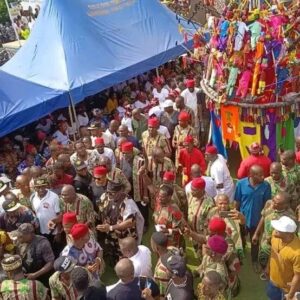
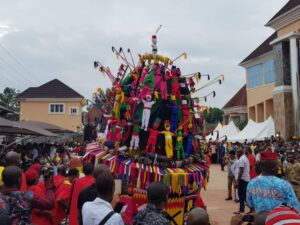
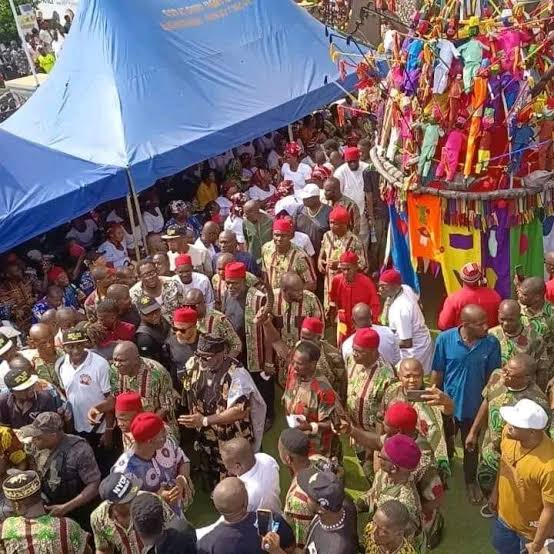
Nwafor Ogidi Every year, when the farming season draws to a close in Ogidi, Anambra State, the town turns its attention homeward. For eleven days, families gather, people living outside the community make their way back, and the town’s cultural life comes into full view through music, masquerades, food, prayers and communal celebration. It is the period of Nwafor, an annual festival whose origins are closely tied to the agricultural life of the community.
In his documentary titled, The Eleven Days of Nwafor Ogidi, The Happy Earl takes viewers into that tradition, tracing the festival beyond its public spectacle to the history, beliefs and social practices that have sustained it. The film also raises a question that reaches beyond Ogidi: what happens to a culture when the people who carry its knowledge begin to disappear?
Nwafor is traditionally associated with the end of the planting season. In the agricultural cycle that shaped older Ogidi society, farmers could spend considerable periods away from the village working their farms. The festival created an important point of return, bringing people back after months of cultivation for thanksgiving and communal celebration, while also looking forward to the harvest.
Yam occupies an important place in that history. In traditional Igbo society, it is often been associated with male identity and labour, while cocoyam has been linked more closely with women’s agricultural work. The distinctions form part of a wider organisation of farming and household responsibilities that gave agriculture a social meaning beyond the production of food.
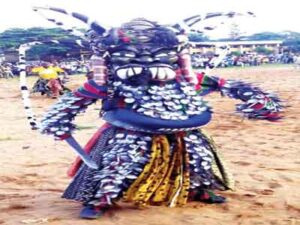
Nwafor consequently sits at the meeting point of farming, family and community life. It is a period to acknowledge the work of the season, give thanks for protection and provision, and pray for what the coming harvest will bring. The celebration that follows provides its own rhythm, with masquerades, music, food, drinking and visits creating the atmosphere for which the festival is now widely known.
However, the meaning of Nwafor does not end with the agricultural calendar.
For Ogidi people living outside the town, the festival has become an important occasion for returning home. Migration has changed the way many Igbo communities relate to their ancestral towns, with education, employment and family life taking people to urban areas in Kano, Lagos, Abuja, other parts of Nigeria and countries outside Africa. Nwafor offers one of those moments when the distance between where people live and where they come from becomes less significant. The return itself has become part of the tradition.
That homecoming also explains why Nwafor carries a significance that extends beyond the performances and celebrations. The festival brings together people who may otherwise have little opportunity to meet during the year, reconnects families and gives younger members of the community an opportunity to encounter customs that might not form part of their everyday lives.
The Happy Earl’s documentary places this living tradition against a much longer history.
Before British colonial administration transformed political structures across southeastern Nigeria, communities such as Ogidi did not necessarily organise themselves around a single central ruler. Authority operated through institutions including age grades and village assemblies, allowing different sections of the community to participate in decision-making.
Colonial rule introduced a different political arrangement. The British established warrant chiefs in southeastern Nigeria as part of their system of indirect administration, creating appointed local authorities through whom colonial officials could administer communities and pursue policies including taxation. The change altered existing structures of authority and became part of the wider transformation of Igbo society under colonialism.
The history is relevant to Nwafor because the festival has never existed outside the changes affecting Ogidi itself. Its survival has taken place alongside shifts in political authority, religion, education, agriculture and migration. The community that celebrates Nwafor today is not the same community that celebrated it generations ago, even though the festival continues to provide a link between them.
Christianity presents perhaps the most complicated part of that evolution.
Like many indigenous traditions across southeastern Nigeria, Nwafor has had to exist within a society where Christianity has become deeply established. For some Christians, indigenous festivals can raise questions about the religious practices associated with them and whether participation conflicts with Christian belief. The documentary, however, presents another interpretation: that Nwafor can be understood as a cultural thanksgiving and communal celebration without requiring people to abandon their Christian faith.
One of the film’s contributors draws a comparison with Christian periods such as Advent and Lent. Those seasons create a period of preparation and anticipation before major celebrations. Nwafor similarly occupies a place within the cultural calendar leading towards the New Yam festivities.
The comparison is significant because it reflects a reality that has become common in many Igbo communities. Christianity did not erase every aspect of indigenous identity. Instead, people have continued to negotiate the relationship between the faith they practise and the culture they inherited.
That negotiation is part of the story of Nwafor and so is the question of what has already been lost.
Much of the knowledge that shaped older Igbo communities was transmitted orally. People learnt customs by watching elders, listening to stories, participating in ceremonies and being taught the practices expected of them. Knowledge of farming, crafts, medicine, weather, family relationships and community laws could pass from one generation to the next without ever appearing in a written record.
That system preserved an enormous body of knowledge, but it also depended on continuity because when an elder dies without passing on what they know, that knowledge can disappear with them.
The documentary draws attention to this problem through examples ranging from the traditions surrounding the breaking of kola nut to indigenous crafts, medicinal knowledge and older understandings of the natural environment. These practices may appear unrelated, but together they form the details through which a society understands itself.
The concern is therefore larger than whether particular customs remain popular. A community can continue performing a ceremony while gradually losing its explanation for why the ceremony exists. The younger generation may inherit an action without inheriting the knowledge behind it; which is where documentation becomes important.
Efforts in Ogidi to record aspects of the community’s history, customary laws and traditional institutions reflect an increasing awareness that oral transmission alone may not be enough. Recording these things creates another way for knowledge to move between generations, particularly at a time when families are increasingly dispersed and younger people may grow up far from the communities where their parents and grandparents were raised.
In that sense, The Eleven Days of Nwafor Ogidi is itself part of the documentation it calls for.
The documentary records people speaking about a tradition that might otherwise be encountered only through personal memory. It preserves explanations of practices and histories for viewers who may never have experienced them directly. It also captures Nwafor at a particular point in the life of Ogidi, when an old agricultural festival continues to attract a community that has changed considerably since its earliest years.
That tension between continuity and change gives the festival much of its contemporary relevance. Nwafor remains rooted in an agricultural calendar, yet many of the people who return for it no longer depend on farming for their livelihood. Christianity is now an established part of community life, yet the festival remains an important expression of cultural identity. Ogidi people live across Nigeria and the diaspora, yet many still consider the annual celebration a reason to return home.
The festival has therefore adapted without disappearing.
Its masquerades, gatherings and communal celebrations provide the visible side of that continuity and beneath them are older ideas about land, labour, thanksgiving, family and belonging that continue to give the festival meaning.
That is what makes The Eleven Days of Nwafor Ogidi worthwhile.
There is a difference between preserving an event and preserving the knowledge surrounding it. A recording of masquerades can show future generations what the festival looked like. A record of the people who understand its history can help explain why those masquerades appeared in the first place, why the festival lasted eleven days, why people returned from distant places and how the celebration fitted into the wider life of the community.
The documentary places those questions alongside the festival itself.
The result is a portrait of a tradition that has survived not because Ogidi has remained unchanged, but because successive generations have continued to find a place for Nwafor within their changing lives. Its agricultural origins remain visible, its religious meaning continues to be debated and interpreted, and its role as a homecoming has perhaps become even more significant as Ogidi people spread farther from home.
For eleven days, the community comes together around something inherited from those who came before them. What they do with that inheritance will determine what Nwafor becomes for those who come after.
The Happy Earl’s documentary, in recording the festival and the stories surrounding it, adds its own contribution to that inheritance. It gives the present generation an opportunity to see Nwafor not simply as an annual celebration, but as part of a much longer story about Ogidi, its people and the continuing work of remembering who they are.