The History of Ìkoro: Igbo’s Ancient Communication Slit Drum
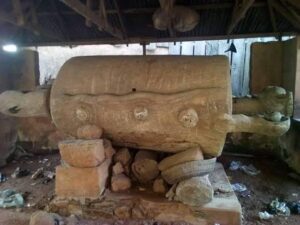
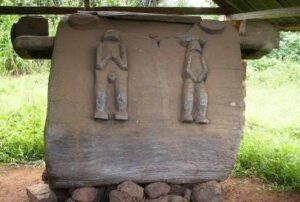
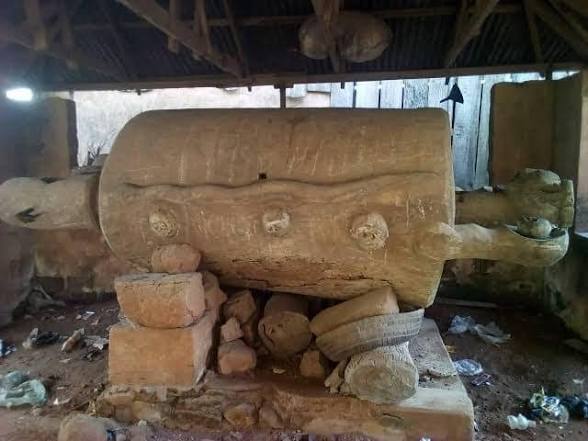
Ìkoro is a traditional Igbo drum used in Igbo culture and tradition. It is a large, slit drum made from a hollowed-out log, typically played with sticks or mallets. Ikoro drums are an integral part of Igbo music, communication, and ceremonies, used to:
– Convey messages and announcements
– Accompany dances and songs
– Signal important events and gatherings
– Honor the gods and ancestors
– Showcase artistic expression
The Ikoro looks similar to the Ekwe, another Igbo slit drum; the difference between the Ikoro and Ekwe is the size. Ekwe is an ordinary musical instrument and is used to play many types of traditional music. Ekwe is usually portable and smaller in size while Ikoro is gigantic in size and cannot be carried by one person and is always stationary in a fixed place, usually at the village square. ing community, unity, and heritage.
Ikoro drums hold significant cultural and symbolic meaning in Igbo society, representing community, unity, and heritage.
The Ikoro is an ancient, monumental wooden slit drum used by the Igbo people of Nigeria for mass communication and community mobilization.
What is the Ikoro?
• Design: Carved from a single large tree trunk, it is a giant stationary slit drum.
• Location: It is a sacred, immovable artifact typically kept under a shelter in the village square.
• Sound: Its deep tones travel for miles to share messages through specific rhythms.
Purpose and Meaning
• Emergencies: Sounded during wars, murders, or major calamities.
• Gatherings: Used to summon the community assembly for urgent meetings.
• News: Signals important tragic or joyful community events.
Usage and Tradition
• Players: Only specially trained, trusted men are allowed to play it.
• Response: Hearing the Ikoro means residents must hurry to the village square immediately.