The History of Owa: An Ika-Igbo Kingdom Built from Many Lineages
Owa is one of the historic kingdoms of the Ika people of Delta State. Its centre is Owa-Oyibu, in present-day Ika North-East Local Government Area. The kingdom belongs to the wider Ika cultural and linguistic region of western Igbo country, and historical and ethnographic sources place the Ika area within that western Igbo zone. Owa’s own traditions, however, carry several different migration stories.
For that reason, Owa’s history cannot be reduced to the story of one migrant group. Its constituent communities trace themselves to Nri, Ute-Okpu, Agbor, Benin and other neighbouring places. The tradition of Owa-Oyibu, the kingdom’s political centre, is especially telling: it links the founding lineage to Ute-Okpu and ultimately to Nri. That places one of the main foundations of the kingdom within an Igbo migration from east of the Niger.
Owa and the Ika-Igbo World
The Ika region sits between the Niger and the Edo-speaking areas to the west, so its history was shaped by centuries of movement in both directions. Ika identity, in language and culture, grew out of contact between communities on both banks of the Niger. Older ethnographic classifications grouped the Ika with the Aniocha, Oshimili and Ukwuani as part of the western Igbo area.
Owa was one of the Ika polities that took shape in this frontier setting. No single migration produced its people. They came together through the settlement and integration of different communities.
The Ute-Okpu and Nri Connection
One of the most important traditions about Owa begins at Ute-Okpu rather than at Owa itself. In the account Marshall recorded, Ute-Okpu was founded by Ute, who came from Nri, in present-day Anambra State. Ute had two sons, Okpu and Odogu. Okpu succeeded his father at Ute-Okpu, while Odogu eventually left and founded the settlement that became Owa-Oyibu.
This matters because Odogu is remembered as the founder of the principal Owa settlement. One of the oldest recorded traditions therefore does not start the Owa story with an outside kingdom. It starts with a chain of migration running from Nri to Ute-Okpu to Owa.
The World Bank’s environmental and social assessment for the Ika North-East area describes Owa in similar terms, as having a dual Nri and Benin origin, with Nri migrants settling at Ute-Okpu and Odogu later founding the Owa dynasty.
Odogu and the Foundation of Owa-Oyibu
Whiting recorded an Owa oral tradition, later reproduced in other accounts, which says Odogu left Ute-Okpu after a succession dispute with his brother Okpu. He settled at a place that came to be called Oyibu. Other groups were already living in the wider area when he arrived.
One tradition names Ufie as an earlier settler in the locality, and the relationship between Odogu and Ufie became a lasting part of Owa’s story. A ritual contest at an Ikenga festival is remembered as the moment Odogu’s political superiority was settled. The story explains, in symbolic form, how Odogu became paramount ruler while Ufie remained an important part of the emerging Owa political community. Owa-Oyibu then became the political centre of the Owa communities.
The Formation of a Multi-Lineage Kingdom
The descendants of Odogu were not the only people in Owa. Other communities and lineages were drawn into the Owa political system over time, and each keeps its own tradition of origin. This is central to reconstructing Owa history. When one quarter traces itself to one place and another to somewhere else, that does not point to separate modern ethnic identities. It reflects how communities were formed through migration, settlement, marriage, political incorporation and the founding of new farming settlements.
Owa-Alizomor
Owa-Alizomor is traditionally linked to Ozomor, the brother of Odogu. Owa tradition says Ozomor left Ute-Okpu and founded the settlement that came to be called Alizomor after him. A group known as the Iru had already settled in the area, having migrated from Igwaza near Abudu. After quarrels over land, some of the Iru went back westward, while others stayed and became part of the growing Owa community.
The story shows how layered Owa’s settlement was. An older local population could merge with a later Ika-Igbo migration and end up in the same kingdom.
Owa-Ofie
Owa-Ofie keeps a separate and very old migration tradition. Local accounts say Adagba and his followers founded the settlement after leaving Ekhoha, near present-day Okada. Owa-Ofie is remembered as one of the oldest settlements in the kingdom, and its history is a reminder that Owa grew from several streams of settlement, not from the descendants of one founder.
Owa-Ekei
Owa-Ekei also has its own migration tradition. Earlier ethnographic accounts recorded by Whiting connect its founders, Ekei and his wife Abor, with migration from Benin. The community later moved between Owa territory and settlements around Owanike, and part of the population eventually returned to Owa-Ekei. This is one piece of Owa’s wider population history, not the origin of the whole kingdom.
Owa-Ekei
Owa-Ekei also has its own migration tradition. Earlier ethnographic accounts recorded by Whiting connect its founders, Ekei and his wife Abor, with migration from Benin. The community later moved between Owa territory and settlements around Owanike, and part of the population eventually returned to Owa-Ekei. This is one piece of Owa’s wider population history, not the origin of the whole kingdom.
Owa-Alero
Owa-Alero grew out of several different groups. Its constituent settlements link various families to Ute-Ogbeje, Agbor, Otolokpo and Ute-Okpu, among other places. It is another multi-lineage community, built up through successive settlement and incorporation.
Owa-Nta / Owanta
Owanta, also called Owa-Nta, likewise contains several ancestral groups. Some of its founding families are linked to Ute-Ogbeje, Abavo and Ute-Okpu. One recorded account ties Okwue to Ute-Ogbeje, Osimi to Okpe in Abavo, and Adie to Ute-Okpu. Here again a community was formed by the meeting of Ika-speaking and neighbouring peoples.
Owa-Alidinma
Owa-Alidinma grew as an extension of the wider Owa settlement system. Historical accounts connect its founding with settlement tied to Owa’s political authorities and with the protection of Owa’s commercial interests in the surrounding region.
The Unification of Owa
Owa was shaped by political consolidation as much as by migration. Traditions describe Odogu as a powerful political and military leader who brought several settlements under one authority. Under him, separate settlements and lineages became a recognisable Owa political community. Later rulers are remembered as carrying that work forward.
One of them is Obi Igbedigin Igborgbor Ogidigan, traditionally dated to about 1320–1356. Owa oral tradition remembers him as a great warrior and ruler who widened Owa’s influence and drew communities together under the kingdom. His story should be read as oral tradition, not as independently established chronology, and the dates given for his reign have not been independently confirmed.
Igbedigin and the Osiezi Tradition
Owa tradition ties Igbedigin closely to the Osiezi festival. It says a serious epidemic struck the region. Igbedigin consulted the Ewaise and then instituted a ritual, and its successful conclusion is remembered as the reason the festival was established.
He is also remembered as a formidable warrior who helped consolidate Owa. He is called Ogidigan, a title that speaks of his greatness and power. Praise poetry preserves his memory, and his name is still invoked at important traditional ceremonies.
Some claims about him, such as that he personally conquered particular communities, created the royal burial ground, or fathered specific later lineages, belong to oral tradition. They need independent corroboration before anyone presents them as established fact.
Ogbeohun and the Royal Lineages
Another notable tradition concerns Ogbeohun in Owa-Oyibu. Owa oral history says that members of Idumu-Izomor moved to Idumuesah during an earlier dispute over kingship. Generations later they came back to Owa-Oyibu and founded Ogbeohun.
The village has three principal ancestral sections: Idumu Ojezua, Idumu Omo and Idumu Ewoh. Owa tradition treats Ogbeohun as a royal village and links several of its families to earlier Obis of Owa. The chronology in the tradition, including the date 1837, is an oral date and should be treated as such unless documents support it.
Owa Traditional Government
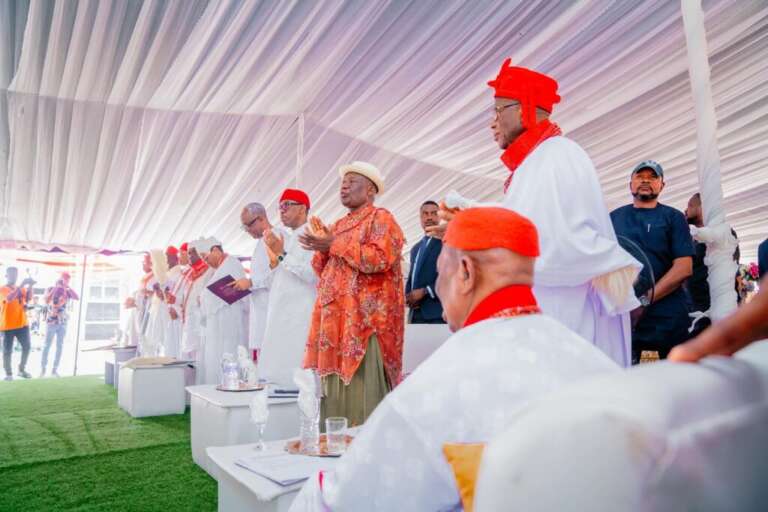
The political centre of the kingdom is Owa-Oyibu, where the Obi of Owa resides. The Obi is both the political and ritual head of the kingdom, but traditional governance works within a wider system of chiefs, elders, villages, quarters and lineage institutions.
Owa developed as a centralised kingdom made up of historically distinct communities, not as a single uniform settlement. That mix of central kingship and constituent communities is key to understanding Ika political history.
Boji-Boji Owa
Boji-Boji Owa belongs mainly to the modern period. According to Whiting’s 1936 account, it grew up around the Agbor railway and military station, especially after troops arrived in 1906. Camp followers and other migrants settled across the Orogodo River, creating a very mixed urban community.
Unlike the older Owa villages, Boji-Boji is largely a product of the colonial era. Its population later grew through migration from many parts of Nigeria, including Igbo, Edo, Yoruba and Hausa communities, and it became an important commercial centre in the Owa area.
Owa Today
Owa-Oyibu remains the administrative and traditional centre of the Owa Kingdom and the headquarters of Ika North-East Local Government Area. The kingdom includes historic communities such as Owa-Oyibu, Owa-Alizomor, Owa-Ofie, Owa-Ekei, Owa-Alero, Owa-Nta/Owanta, Owa-Alidinma and Boji-Boji Owa, though the exact classification and naming of these communities differs between sources and periods.
The present Obi of Owa is HRM Dr Emmanuel Efeizomor II, who has been on the throne since 1959.
Understanding Owa’s History
Owa is best understood as an Ika kingdom formed through several waves of migration and political integration. Its most important foundation story links Odogu of Ute-Okpu to the establishment of Owa-Oyibu, and Ute-Okpu itself remembers an origin at Nri. That gives the traditions of the Ika region an important Nri–Ute-Okpu–Owa connection.
Other Owa communities remember coming from Benin, Agbor, Abavo, Ute-Ogbeje, Abudu and neighbouring areas. These stories should not be merged into one origin. Together they show that Owa was built from the interaction and incorporation of many communities.
The result was an Ika society with its own political institutions, language, festivals, ancestral traditions and shared identity. Owa’s history belongs to the wider history of Ika and western Igbo civilisation, and its migration traditions reveal the complex movement of people across the Niger–Ika–Edo frontier over many centuries.