The History of Religion and Culture in Modern Benin
Religion and Culture in Modern Benin Voodoo, or Vodun as it is properly known in the West Africa country of Benin (formerly the Kingdom of Dahomey), is more than just a religion in modern Benin.
It is an intricate way of life, an official faith, and a pervasive force that shapes the country’s culture, art, philosophy, and identity. Far removed from the sensationalized, Western misconceptions of curses and dolls, Vodun in Benin is a complex, ancestral spiritual tradition that remains a living, dynamic part of culture, identity and spirituality, profoundly relevant today.
The written record
Historical Roots and Official Recognition
Historical context
Religion and Culture in Modern Benin Vodun has deep roots stretching back thousands of years and experienced its most significant development in the Kingdom of Dahomey (present-day Benin) from the 17th to the late 19th century. The term Vodun itself means “spirit” or “God” in the local Fon and Ewe languages.
Historically, Vodun was part of a cosmology that saw the natural world (trees, rocks, rivers, forests) as imbued with spirits; ancestors played central roles, and communities maintained sacred spaces (like forest groves or tree shrines).
During the tragic era of the transatlantic slave trade, Vodun practitioners were forcibly transported to the Americas, where their spiritual traditions influenced the development of religions like Haitian Vodou, Louisiana Voodoo, and Brazilian Candomblé Jejé.
This diasporic spread cemented the religion’s global, albeit often misunderstood, legacy.
Religion and Culture in Modern Benin In a move that officially recognized its cultural and spiritual significance, the government of Benin declared Vodun an official national faith. Furthermore, January 10th of each year was officially designated as National Voodoo Day. This declaration transformed the once-persecuted faith into a recognized part of the national heritage.
Core Beliefs, Rituals and Sacred Spaces.
Religion and Culture in Modern Benin Vodun is a polytheistic and animistic system that offers a holistic view of the cosmos. Practitioners believe in a supreme creator divinity, Mawu-Lissa, who is generally inaccessible to humans. Beneath this supreme being is a vast pantheon of lesser spirits or deities, also called Voduns, which govern specific aspects of nature and life, such as the sea, fertility, and justice.
The Role of Fetishes and Shrines
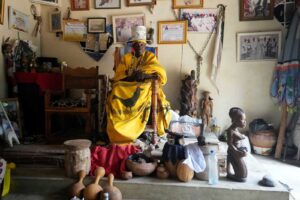
Central to Vodun practice is the use of fetishes, objects believed to embody spiritual power. These can range from small charms to large, powerful shrines like the famous Dankoli fetish, where adherents can offer prayers and sacrifices directly to the gods. Fetishes often guard the entrances to villages and homes, providing protection and seeking prosperity.
Rituals, Sacrifice, and Possession
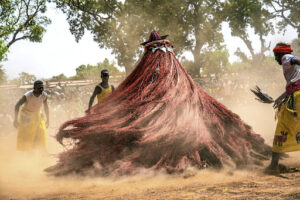
Religion and Culture in Modern Benin Rituals are characterized by vibrant ceremonies involving rhythmic drumming, singing, and dancing. These activities are crucial for summoning the spirits, who may possess human bodies, allowing the spirits to communicate with the community.
Animal sacrifice is a vital part of the practice, used to offer thanks, seek favors, or address ailments. Chickens and goats are the most common offerings, and the meat is typically consumed by the community in a celebratory meal, demonstrating that nothing is wasted. Divination, particularly through the system of Fá, is also employed to gain insight and answers from the Voduns.
Some major ritual features include; ceremonies in sacred forests or groves, which are considered dwellings of spirits. Offerings of palm wine, kola nuts, or animal sacrifices (most commonly chickens or goats) in some contexts.
Sacred festivals and public celebrations: For instance, the annual festival in Ouidah marks Vodun Day (10 January) and attracts local and diaspora participants.
Voodoo’s Place in Modern Beninese Society
Religion and Culture in Modern Benin Despite the influence of Christianity and Islam (the two largest religions in Benin), Vodun remains profoundly important. Approximately 40% of the population openly adheres to the faith, but the figure is arguably much higher, as many Christians and Muslims also turn to Vodun priests (vodounon) for healing, protection, and guidance, a practice known as syncretism.
Cultural and Economic Impact
Vodun’s influence permeates nearly every aspect of Beninese culture, including:
Art and Music: The rhythmic drumming and ceremonial dances are key elements of traditional Beninese music and performance.
Healing: Priests act as ritual leaders, overseers of ceremonies, and healers, often using traditional medicine intertwined with spiritual requests.
Tourism: Sites like the former slave port of Ouidah, considered the cradle of Vodun, and its annual Voodoo Festival, attract international tourists seeking to understand the authentic, non-sensationalized version of the religion.
Vodun plays a vital role in maintaining cultural continuity, especially in linking Benin’s past with diaspora communities. It helps articulate a sense of belonging and historical awareness among Beninese and Africans abroad.
Legal and Cultural Recognition
Vodun was officially recognised as a religion in Benin (alongside Christianity and Islam) in 1996. The practice is well-integrated into national cultural identity. The government and cultural institutions promote Vodun heritage, including festivals and tourism.
Vodun is also listed by UNESCO as an Intangible Cultural Heritage element under “Vodun, beliefs, social practices and ways of living”.
Even among individuals who identify as Christian or Muslim, aspects of Vodun belief and practice persist; such as notions of spirit, ancestor reverence, ritual participation or engagement with traditional healers.
Environmental Stewardship
Religion and Culture in Modern Benin Research suggests that adherence to traditional religions such as Vodun correlates with higher levels of forest-cover preservation and sustainable use of natural resources. For example, one study found that African Traditional Religions (ATR) adherence in Benin had a measurable positive impact on forest cover change. Sacred forests under Vodun care are thus both spiritual and ecological assets.
Contemporary Challenges
Stereotypes and Misunderstandings: Vodun continues to face misrepresentation abroad, often portrayed as “dark magic” or “witchcraft”. In‐country efforts aim to counter that narrative.
Threats to Sacred Spaces: In the modern era, Vodun faces challenges related to development and environmental change. The sacred forests, which are believed to be the vital homes of the spirits and are integral to many rituals, are shrinking due to development efforts, causing concern among worshippers who view their preservation as essential for the future of their religion.
The expansion of agriculture, infrastructure development and deforestation also threaten sacred forests and groves central to Vodun practices. Between 2005 and 2015, Benin’s forests declined significantly, and local Vodun practitioners express concern about loss of sacred land and spiritual harm.
Institutionalisation vs. Authenticity
As Vodun becomes more visible in tourism and heritage frameworks, questions arise about balancing ritual authenticity, community control, commodification, and preserving spiritual integrity.
Youth Engagement and Globalisation: Modernity, urbanisation and global religions challenge the transmission of Vodun knowledge, yet there is also potential in diaspora engagement, digital platforms and cross-cultural exchange.
The Vodun religion in Benin is far more than a relic of the past; it is a living tradition intertwined with culture, identity, nature and society. From its origins in the Kingdom of Dahomey to its recognition today as national heritage, Vodun challenges simplistic stereotypes. It offers insights into how ancestral beliefs can co-exist with modernity, contribute to environmental stewardship, foster cultural tourism and sustain community bonds.
The challenges of misrepresentation, environmental threat and cultural commodification remain, but so do opportunities for revitalisation, meaningful heritage engagement and global dialogue on spirituality and ecology.
Ultimately, the Voodoo legacy in Benin is one of resilience and integration. It is a dynamic force that preserves ancestral traditions while adapting to modern life, cementing its status as the spiritual foundation of the nation.
Religion and Culture in Modern Benin